Understanding Energy Performance Certificates (EPCs): Complete Guide for Property Buyers and Landlords
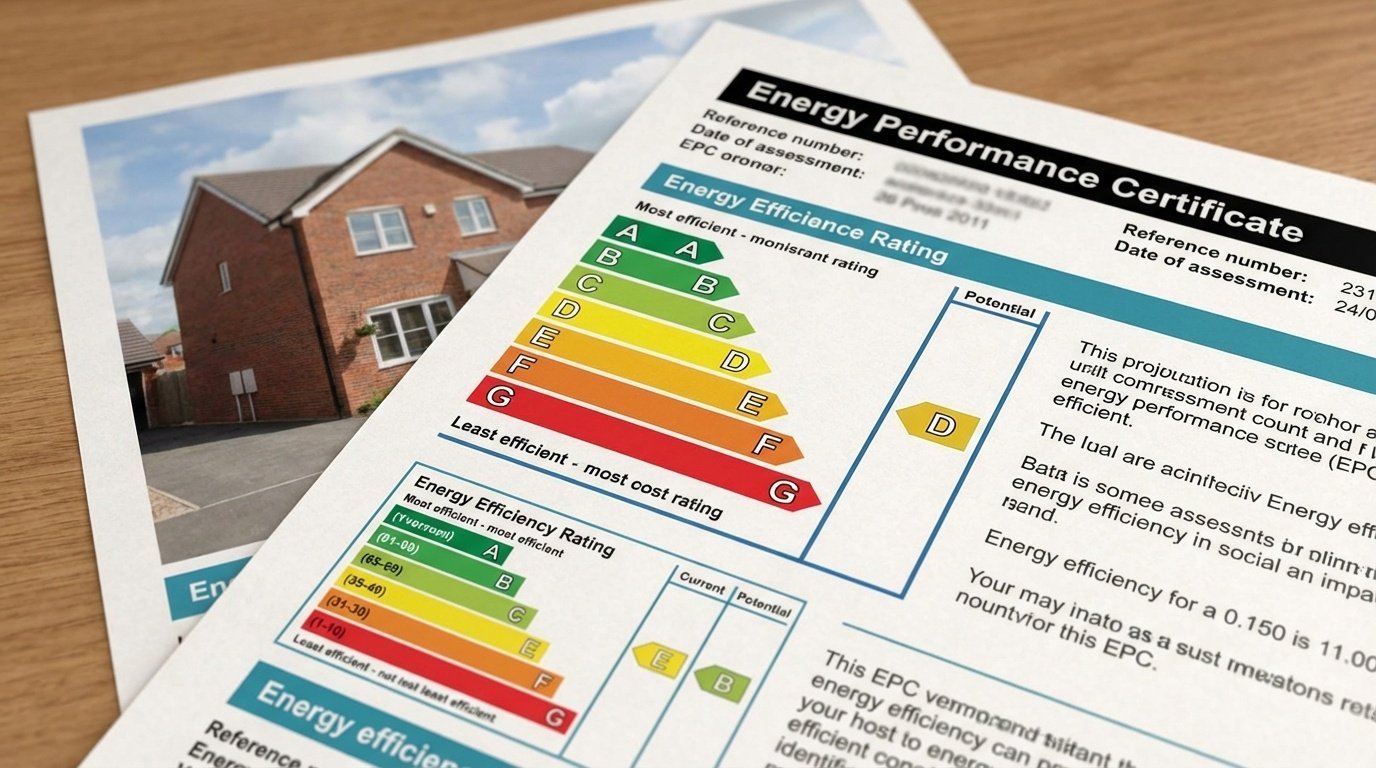
Energy Performance Certificates (EPCs) have evolved from bureaucratic formality to critical factor in property transactions. With tightening rental standards, rising energy costs, and increasing buyer focus on running costs, your property's EPC rating directly affects its value, rentability, and mortgage eligibility. Yet many property owners don't fully understand what EPCs measure, how ratings are calculated, or what improvements deliver the best return on investment.
Our RICS surveyors assess energy efficiency as part of building surveys and advise on improvement priorities. This comprehensive guide explains everything you need to know about EPCs, from legal requirements to practical improvements that enhance ratings and reduce costs.
What Is an Energy Performance Certificate?
An EPC assesses a property's energy efficiency and provides ratings on a scale from A (most efficient) to G (least efficient). Think of it like the energy labels you see on fridges and washing machines—but for entire buildings.
What EPCs Show
Every EPC includes:
- Current Energy Efficiency Rating: Band A-G based on property's existing condition
- Potential Rating: The band achievable with recommended improvements
- Estimated Energy Costs: Annual fuel bills for lighting, heating, and hot water (standardized calculation, not actual bills)
- Environmental Impact (CO2): Current and potential carbon emissions rating
- Recommendations: Cost-effective improvements to enhance rating, with:
- Description of improvement measure
- Indicative cost ranges
- Typical savings per year
- Impact on EPC rating
- Property Details: Floor area, construction type, age, heating system
How EPC Ratings Are Calculated
EPCs use the Standard Assessment Procedure (SAP) for houses or the Simplified Building Energy Model (SBEM) for commercial properties. The assessment considers:
- Heating system: Efficiency of boiler/heating (biggest single factor)
- Insulation levels: Loft, wall, and floor insulation
- Glazing: Single, double, or triple glazing quality
- Lighting: Proportion of low-energy bulbs
- Hot water system: Boiler, cylinder insulation, solar water heating
- Renewable energy: Solar panels, heat pumps, wind turbines
- Building construction: Wall types, roof construction, floor types
- Air tightness: Draughtproofing effectiveness
Importantly, EPCs assess theoretical energy efficiency, not actual energy use. Two identical properties will receive identical ratings regardless of occupant behavior.
EPC Rating Bands and Score Ranges
- Band A: 92-100 (exceptionally efficient - very rare in existing buildings)
- Band B: 81-91 (very efficient - new build standards)
- Band C: 69-80 (efficient - future rental minimum from 2025)
- Band D: 55-68 (average efficiency - most UK properties)
- Band E: 39-54 (below average - current rental minimum)
- Band F: 21-38 (poor efficiency - cannot legally rent)
- Band G: 1-20 (very poor efficiency - cannot legally rent)
Legal Requirements: When You Need an EPC
For Property Sales
EPCs are legally required when:
- Marketing a property: Must be available to potential buyers from first point of marketing
- Valid for 10 years: Can be reused if less than 10 years old
- Provided free to buyers: Cannot charge for providing EPC copy
- Uploaded to national register: Publicly accessible at epcregister.com
Penalty for non-compliance: Fines up to £5,000 (though typically £500-£1,000 for residential properties).
For Rental Properties
Landlords must:
- Provide valid EPC to tenants before they move in (copy within 28 days)
- Minimum rating E required since April 2020 for new and renewed tenancies
- Minimum rating C required from 2025 for new tenancies, 2028 for existing tenancies (proposed - check current legislation)
- Upload to EPC register and provide unique certificate reference number
Penalties:
- Renting property below minimum standard: Fine up to £30,000
- Not providing EPC to tenants: Fine up to £5,000
- Properties rated F or G cannot be legally let
Exemptions
Limited exemptions allow renting F/G-rated properties when:
- All relevant improvements costing under £3,500 have been made but rating still F or G
- Required improvements would devalue property by more than 5%
- Listed buildings where improvements require consent
- No appropriate wall insulation systems available
Exemptions must be registered and last maximum 5 years.
EPCs Not Required For
- Buildings due for demolition
- Places of worship
- Temporary buildings (used less than 2 years)
- Stand-alone buildings under 50m² floor area
- Listed buildings where compliance would "unacceptably alter character or appearance"
How EPC Ratings Affect Property Values
Growing evidence shows energy efficiency directly impacts property prices:
Value Premium for High Ratings
- Band A/B properties: Command 5-10% premium over Band D equivalents
- Band C properties: 2-5% premium over Band D equivalents
- Band E properties: 0-2% discount versus Band D
- Band F/G properties: 5-15% discount versus Band D
For a £400,000 London property, the difference between Band C and Band F could be £20,000-£40,000 in value.
Why Energy Efficiency Affects Values
- Running Costs: Band G properties cost £2,000-£2,500 more annually than Band C properties in energy bills
- Mortgage Affordability: Lenders increasingly factor energy costs into affordability calculations
- Rental Restrictions: F/G properties cannot be let, C+ rating required from 2025
- Future-Proofing: Government trajectory toward zero-carbon homes by 2050
- Buyer Priorities: 67% of buyers consider energy efficiency "important" or "very important"
Mortgage Implications
Some lenders now offer:
- Green mortgages: 0.1-0.5% interest rate reduction for Band A/B properties
- Energy efficiency incentives: Cashback or higher loan-to-value for efficient properties
- Improvement loans: Additional borrowing for energy upgrades
Conversely, some lenders charge premiums or restrict lending on poor-performing properties.
Estimated Energy Costs by EPC Rating
For typical 3-bed semi-detached London house (90m²):
- Band A/B: £400-£800 annual energy costs
- Band C: £800-£1,200 annual energy costs
- Band D: £1,200-£1,600 annual energy costs
- Band E: £1,600-£2,000 annual energy costs
- Band F: £2,000-£2,400 annual energy costs
- Band G: £2,400-£3,000+ annual energy costs
Over 10 years, the difference between Band C and Band F is £12,000-£18,000 in energy bills.
Improving Your EPC Rating: Cost-Effective Measures
Recommended improvements ranked by cost-effectiveness:
Quick Wins (Under £500)
- LED Lighting:
- Cost: £100-£300 for whole house
- EPC impact: +1-2 points
- Annual saving: £30-£50
- Payback: 2-6 years
- Cylinder Insulation Jacket:
- Cost: £15-£30
- EPC impact: +1-2 points
- Annual saving: £40-£60
- Payback: 6-12 months
- Radiator Reflector Panels:
- Cost: £50-£150
- EPC impact: +1 point
- Annual saving: £20-£40
- Payback: 2-5 years
- Draughtproofing:
- Cost: £200-£400 (professional installation)
- EPC impact: +2-3 points
- Annual saving: £60-£100
- Payback: 2-4 years
Medium Investment (£500-£2,000)
- Loft Insulation (270mm depth):
- Cost: £300-£500 (typical semi-detached)
- EPC impact: +3-8 points
- Annual saving: £150-£250
- Payback: 2-3 years
- Floor Insulation:
- Cost: £800-£1,200 (ground floor)
- EPC impact: +2-4 points
- Annual saving: £80-£120
- Payback: 7-10 years
- Heating Controls (Smart Thermostat + TRVs):
- Cost: £500-£800
- EPC impact: +2-4 points
- Annual saving: £100-£180
- Payback: 3-5 years
Major Investment (£2,000-£10,000)
- Cavity Wall Insulation:
- Cost: £500-£1,000 (typical semi)
- EPC impact: +5-10 points
- Annual saving: £200-£300
- Payback: 2-5 years
- Note: Only suitable if property has unfilled cavities (many London properties don't)
- Solid Wall Insulation:
- Cost: £4,000-£8,000 (internal) or £8,000-£15,000 (external)
- EPC impact: +10-15 points
- Annual saving: £300-£500
- Payback: 13-30 years
- Note: Most impactful for Victorian/Edwardian solid-wall properties
- New Condensing Boiler:
- Cost: £2,000-£3,500
- EPC impact: +5-15 points (depends on existing boiler age)
- Annual saving: £200-£400
- Payback: 5-10 years
- Double/Triple Glazing:
- Cost: £4,000-£8,000 (typical 3-bed house)
- EPC impact: +3-8 points
- Annual saving: £120-£200
- Payback: 20-40 years
Premium Investment (£10,000+)
- Solar PV Panels (4kW system):
- Cost: £5,000-£8,000
- EPC impact: +5-10 points
- Annual saving: £400-£600 (electricity + export payments)
- Payback: 8-15 years
- Air Source Heat Pump:
- Cost: £10,000-£18,000 (including system upgrades)
- EPC impact: +15-25 points
- Annual saving: £400-£800 (gas → heat pump)
- Payback: 12-25 years (but grants available)
Real-World Upgrade Example: From Band F to Band C
Victorian Terrace House, South London
Starting Point:
- EPC Rating: F (32 points)
- 3-bed mid-terrace, solid walls, single glazing, 15-year-old boiler
- Annual energy costs: £2,300
- Issue: Cannot legally let property
Improvement Package:
- Loft insulation to 270mm: £400
- Internal solid wall insulation (rear wall only): £3,200
- New condensing combi boiler: £2,800
- Smart thermostat and TRVs: £650
- LED lighting throughout: £200
- Draughtproofing doors and windows: £350
Total Investment: £7,600
New EPC Rating: C (71 points)
New Annual Energy Costs: £1,100
Annual Saving: £1,200
Simple Payback: 6.3 years
Additional Benefits:
- Property now lettable and complies with 2025 standards
- Estimated value increase: £15,000-£25,000
- Improved comfort and reduced condensation/mould risk
- More attractive to buyers/tenants
Available Grants and Financial Support
Government schemes to help fund energy improvements:
1. ECO4 Scheme (Energy Company Obligation)
- Who: Low-income households and private rented properties with EPC D-G
- Covers: Insulation, heating upgrades, renewable energy
- Funding: Up to 100% of costs for eligible households
- Apply through: Participating energy companies
2. Boiler Upgrade Scheme
- Who: Homeowners and landlords in England and Wales
- Grant: £7,500 for air source heat pumps, £5,000 for biomass boilers
- Note: Property must meet minimum insulation standards
3. Local Authority Grants
- Many London boroughs offer additional energy efficiency grants
- Eligibility and funding varies by borough
- Check your local council website for available schemes
4. Green Deal Finance (Limited Availability)
- Interest-bearing loans for energy improvements
- Repaid through energy bills
- Limited providers currently operating
Common EPC Mistakes and Myths
Myth 1: "EPCs Reflect Actual Energy Bills"
False. EPCs use standardized assumptions about heating patterns and occupancy. Your actual bills depend heavily on how you use the property. However, EPCs do accurately compare relative efficiency between properties.
Myth 2: "I Can't Improve My EPC Without Major Works"
False. Simple measures like loft insulation, LED lighting, and heating controls can improve ratings by 5-10 points for under £1,000. Many F-rated properties can reach E with £500-£1,500 investment.
Myth 3: "All Assessors Give the Same Rating"
Partly false. While methodology is standardized, assessor interpretation of property features can vary. If you believe your EPC is incorrect, commission a new assessment from a different accredited assessor.
Myth 4: "New Windows Are the Best Way to Improve Ratings"
False. Windows have long payback periods (20-40 years) and deliver smaller EPC gains than insulation or boiler upgrades. They're worth doing for comfort and appearance but aren't the most cost-effective EPC improvement.
Common Mistakes
- Not providing documentation: Show assessor proof of insulation, boiler efficiency, glazing specifications to ensure accurate rating
- Accepting low ratings without challenge: If rating seems wrong, commission reassessment
- Improving everything at once: Prioritize cost-effective measures first
- Ignoring potential rating: The "potential" rating shows what's achievable; use it to plan improvements
How Our Building Surveys Address Energy Efficiency
Our RICS surveys assess energy efficiency implications:
- Review existing EPC: Analyze current rating and recommendations
- Assess improvement feasibility: Whether recommended measures are practical/cost-effective
- Identify defects affecting efficiency: Missing/damaged insulation, heating system issues
- Estimate improvement costs: More detailed than EPC generic estimates
- Prioritize measures: Which improvements deliver best value
- Rental compliance: Whether properties meet/can reach required standards
Frequently Asked Questions
How long is an EPC valid?
EPCs are valid for 10 years from the date of issue. You can commission a new EPC at any time if you've made improvements or believe the original assessment was inaccurate. The most recent EPC is the valid one.
Who can produce an EPC?
Only accredited Domestic Energy Assessors (DEAs) can produce EPCs. Check the assessor is registered on the official EPC register (epcregister.com). Typical cost: £60-£120 for houses, £50-£80 for flats.
Can I challenge an EPC rating?
Yes. If you believe the EPC contains errors, contact the assessor first. If unresolved, complain to their accreditation scheme. Alternatively, commission a new EPC from different assessor. You cannot appeal the rating itself, only factual errors.
What happens if I let property without valid EPC or below minimum standard?
Local authorities can fine up to £5,000 for missing EPCs and up to £30,000 for renting F/G-rated properties. Additionally, you cannot use Section 21 notices to evict tenants if property doesn't comply with EPC regulations.
Do listed buildings need EPCs?
Generally yes. EPCs are required for listed buildings except where compliance would "unacceptably alter character or appearance." However, listed buildings are exempt from minimum EPC rental standards where improvements require listed building consent.
Can I use an old EPC for a new tenancy?
Yes, if the EPC is less than 10 years old and the property hasn't materially changed. However, if rating is below C, consider updating the EPC after improvements rather than relying on old certificate showing poor rating.
Related Articles
Questions About Energy Efficiency?
Our RICS building surveys assess energy efficiency alongside structural condition, providing realistic improvement costs and priorities. We help you understand what EPC upgrades are worthwhile investments.
Get Energy-Focused SurveyEPC improvement advice • Cost-benefit analysis • Reports within 48 hours