Asbestos in Older Properties: What Every Homebuyer and Owner Must Know
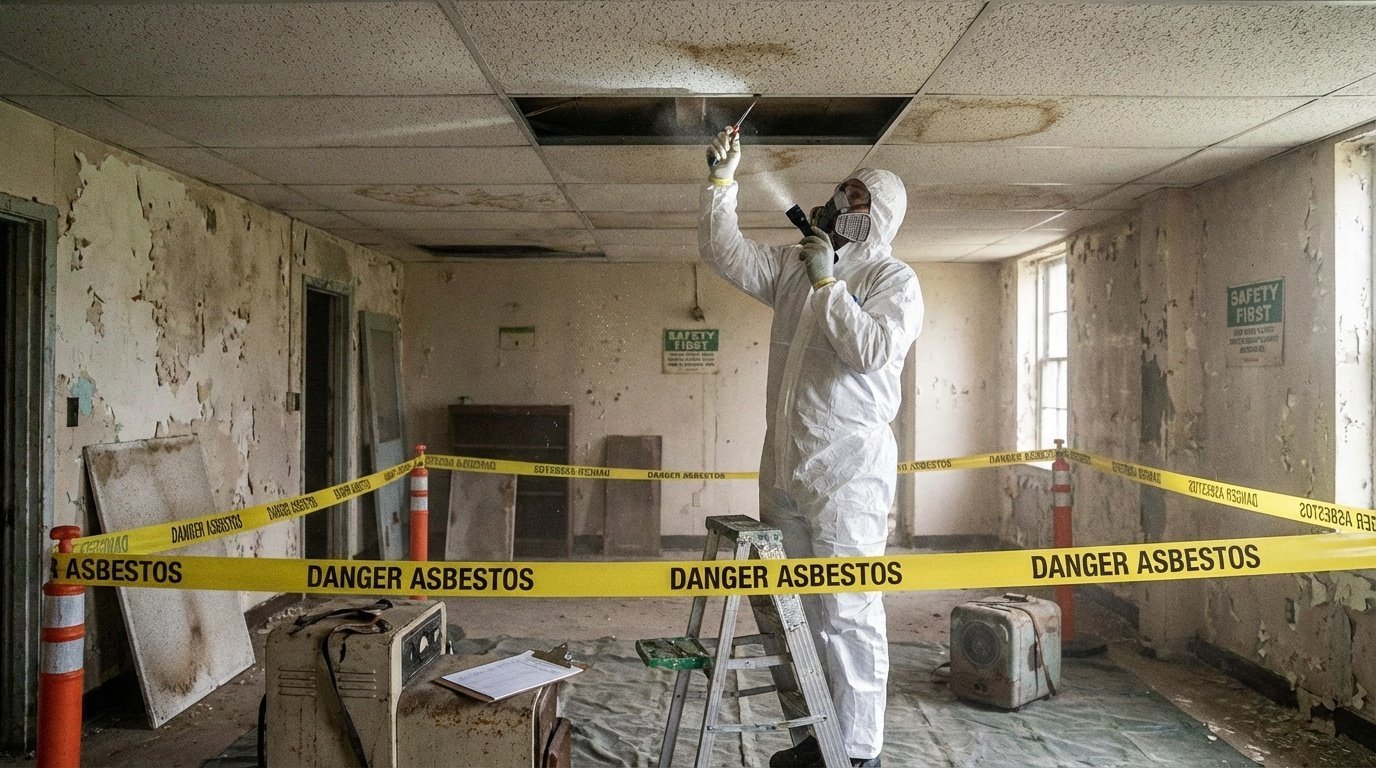
If you're buying or renovating a property built before the year 2000, there's a significant chance it contains asbestos. While the word "asbestos" often causes alarm, understanding where it's found, the actual risks it poses, and how to manage it safely can help you make informed decisions about your property investment.
Our RICS chartered surveyors regularly encounter asbestos-containing materials (ACMs) in London properties. This comprehensive guide explains everything you need to know about asbestos in older buildings, from identification and health risks to survey requirements and removal costs.
Understanding Asbestos: What It Is and Why It Was Used
Asbestos is a naturally occurring mineral that was extensively used in UK construction from the 1950s through to 1999, when it was finally banned. Its popularity stemmed from remarkable properties that made it seem like a miracle building material:
- Fire resistance: Asbestos doesn't burn, making it ideal for fireproofing
- Insulation: Excellent thermal and acoustic insulation properties
- Durability: Resistant to chemical damage and weathering
- Affordability: Relatively inexpensive to mine and process
- Versatility: Could be mixed with cement, plastics, and textiles
These properties led to asbestos being incorporated into hundreds of building products, from ceiling tiles and floor coverings to pipe insulation and roofing materials. It's estimated that over half a million commercial and residential buildings in the UK still contain asbestos.
Types of Asbestos Found in Properties
There are three main types of asbestos that were used in UK construction:
1. White Asbestos (Chrysotile)
The most commonly used type, accounting for about 95% of asbestos in buildings. Found in roofing materials, floor tiles, pipe insulation, and textured coatings. While considered "less dangerous" than other types, it still poses significant health risks.
2. Brown Asbestos (Amosite)
Used primarily for insulation in ceiling tiles, pipe insulation, and insulating boards. More dangerous than white asbestos due to its needle-like fibers.
3. Blue Asbestos (Crocidolite)
The most dangerous type but also the least common in UK buildings. Used in specialized insulation and some spray coatings. Banned earlier than other types due to its extreme health hazards.
Important Safety Note
You cannot identify the type of asbestos by appearance alone. All suspected asbestos materials must be tested by a UKAS-accredited laboratory to confirm presence and type. Never disturb materials you suspect contain asbestos.
Where Asbestos is Commonly Found in Properties
Our surveyors regularly encounter asbestos in these locations within pre-2000 properties:
Interior Locations
- Artex and textured coatings: Decorative ceiling and wall finishes applied before 1985 frequently contain asbestos (up to 5% asbestos content)
- Floor tiles and vinyl: Thermoplastic floor tiles and vinyl sheet flooring, plus the adhesives used to fix them
- Pipe lagging: White or gray insulation around heating pipes, especially in basements and lofts
- Boiler insulation: Insulating boards around older boilers and in airing cupboards
- Ceiling tiles: Acoustic ceiling tiles in commercial properties converted to residential
- Bath panels: Some bathroom panels from the 1960s-80s
- Toilet cisterns: Older toilet cisterns may contain asbestos
Exterior Locations
- Roof sheets: Corrugated asbestos cement roofing, particularly on garages, sheds, and outbuildings
- Soffits and fascias: Asbestos cement boards under eaves
- Rainwater goods: Downpipes and guttering made from asbestos cement
- External wall cladding: Flat asbestos cement sheets used as cladding
- Garage roofs: Very commonly found in garages built before 2000
Hidden Locations
- Behind electrical fuse boxes and consumer units
- Within partition walls as insulating boards
- Under floor coverings and beneath stairs
- In loft spaces (insulation, water tanks, panels)
- Around fire surrounds and behind gas fires
In a typical London Victorian or Edwardian property renovated in the 1960s-80s, our surveyors might find asbestos in 5-10 different locations.
Understanding the Health Risks
The health concerns surrounding asbestos relate entirely to airborne asbestos fibers. When asbestos materials are disturbed, damaged, or deteriorate, microscopic fibers can be released into the air. If inhaled, these fibers can become lodged in the lungs, leading to serious diseases:
Asbestos-Related Diseases
- Asbestosis: Scarring of lung tissue causing breathlessness (typically 10-20 years after exposure)
- Mesothelioma: Aggressive cancer of the lining of the lungs or abdomen (15-60 years after exposure)
- Lung cancer: Significantly increased risk, especially for smokers (15-35 years after exposure)
- Pleural thickening: Inflammation and thickening of the lung lining causing breathlessness
These diseases typically take decades to develop, which is why we're still seeing thousands of asbestos-related deaths in the UK each year from exposures that occurred 30-40 years ago.
The Most Important Fact About Asbestos
Asbestos is only dangerous when disturbed. If asbestos-containing materials are in good condition and left undisturbed, they pose minimal risk. Many properties safely contain asbestos for decades. The risk comes from cutting, drilling, sanding, or allowing materials to deteriorate.
Asbestos Surveys: Types and When You Need Them
There are two main types of asbestos surveys, each serving different purposes:
1. Asbestos Management Survey (Type 2)
Cost: £200-£400 for typical residential property
This is the standard survey for identifying asbestos materials that could be disturbed during normal occupation and maintenance. A management survey involves:
- Visual inspection of accessible areas
- Sampling of suspected materials (sent to UKAS laboratory)
- Assessment of material condition and risk
- Register of asbestos locations with photographs
- Management recommendations
When you need it: Before purchasing any pre-2000 property, for landlords managing rental properties, or when planning minor renovation work.
2. Asbestos Refurbishment/Demolition Survey (Type 3)
Cost: £400-£800+ depending on property size and complexity
This is a more intrusive survey required before major renovation, refurbishment, or demolition work. The surveyor will:
- Access all areas, including those requiring structural opening
- Take comprehensive samples from all suspected materials
- Provide detailed removal specifications
- Identify all ACMs that could be disturbed during works
When you need it: Before any major renovation, loft conversion, extension, or demolition work on pre-2000 properties. This is typically a legal requirement under the Control of Asbestos Regulations 2012.
Case Study: Asbestos Discovery During Renovation
Hammersmith Victorian House Renovation
The Situation: Clients purchased a Victorian house (built 1895, renovated 1975) and planned a complete ground-floor renovation including kitchen extension.
Survey Findings: Our refurbishment survey identified asbestos in seven locations:
- Artex ceiling coating in three bedrooms (5% chrysotile)
- Floor tiles throughout ground floor (15% chrysotile)
- Pipe lagging in basement (amosite - brown asbestos)
- Garage roof sheets (15% chrysotile)
Action Taken: Licensed contractors removed high-risk amosite pipe lagging (£2,400). Ground floor tiles were encapsulated under new flooring (£800 instead of £3,500 removal). Artex ceilings boarded over (£1,200). Garage roof left in place with warning labels (safe if undisturbed).
Total Asbestos Costs: £4,400 - significantly less than if all materials were removed, and work completed safely within regulations.
Outcome: Renovation proceeded safely. Clients received asbestos management plan for remaining materials. Property value unaffected, and clients have peace of mind knowing exactly where asbestos is located.
Asbestos Removal vs. Management: Making the Right Choice
Not all asbestos needs to be removed. In fact, removal often creates more risk than leaving materials in place and managing them properly.
When to Remove Asbestos
- Materials are damaged, deteriorating, or crumbling
- Location will be disturbed during renovation/building work
- High-risk materials (friable asbestos, loose fibers)
- Materials are difficult to protect or label
- Peace of mind (though this is the most expensive option)
When to Manage in Place
- Materials in good condition and unlikely to be disturbed
- Low-risk materials (asbestos cement, bonded materials)
- Areas with restricted access
- When removal costs are prohibitive
Asbestos Removal Costs (2025)
Licensed asbestos removal costs vary significantly based on type, location, and accessibility:
- Artex ceiling coating removal: £40-£60 per square meter
- Asbestos floor tiles: £30-£50 per square meter
- Pipe lagging: £50-£100 per linear meter
- Garage roof (corrugated sheets): £1,000-£2,500 for typical garage
- Insulating boards: £50-£80 per square meter
- Asbestos soil/vent pipes: £150-£300 per pipe
Total project costs typically range from £1,000 for simple jobs to £5,000+ for complex removals. Always obtain multiple quotes from HSE-licensed contractors.
Encapsulation: The Cost-Effective Alternative
For some materials (particularly floor tiles and textured coatings in good condition), encapsulation offers a safe, cost-effective alternative:
- Covering Artex with plasterboard: £20-£30 per square meter
- Overlaying asbestos floor tiles: £15-£25 per square meter
- Encapsulating pipe work: £20-£40 per linear meter
Encapsulation can reduce costs by 50-70% compared to removal while maintaining safety.
Legal Requirements and Regulations
Property owners and landlords have legal duties under the Control of Asbestos Regulations 2012:
For Landlords
- Duty to identify and assess asbestos in properties (management survey)
- Create and maintain an asbestos register
- Implement an asbestos management plan
- Inform tenants and contractors of asbestos presence
- Monitor condition of asbestos materials
For Homeowners
While homeowners aren't legally required to have an asbestos survey for their own homes, they do have responsibilities:
- Must inform contractors of known asbestos before work begins
- Cannot attempt DIY removal of asbestos (illegal and extremely dangerous)
- Must use licensed contractors for most asbestos removal work
- Should conduct survey before major renovation to protect contractors
Penalties for Non-Compliance
Failing to comply with asbestos regulations can result in:
- Unlimited fines for serious breaches
- Imprisonment for up to two years
- Prohibition notices stopping work immediately
- Civil claims from those exposed to asbestos
How Our RICS Surveys Address Asbestos
During our Level 2 and Level 3 building surveys on pre-2000 properties, we:
- Identify suspected asbestos locations based on material type, age, and appearance
- Note condition and assess whether materials pose current risk
- Recommend dedicated asbestos survey where suspected ACMs are found
- Advise on management or removal priorities
- Estimate costs for asbestos surveys and removal work
- Flag legal requirements if you're planning renovation work
While building surveys include visual identification of suspected asbestos, they cannot definitively confirm asbestos presence - that requires laboratory testing via a dedicated asbestos survey.
Buying a Property with Asbestos: Negotiating and Planning
Discovering asbestos during your property purchase doesn't have to be a deal-breaker. Here's how to approach it:
Negotiation Strategies
- Get quotes for removal/management: Obtain costs from licensed contractors
- Request price reduction: Negotiate based on confirmed costs plus 10-20% contingency
- Ask seller to remove: Some sellers prefer to handle removal themselves
- Consider management costs: If leaving in place, factor ongoing management into value
What to Include in Your Offer
- Condition survey identifying suspected asbestos
- Itemized asbestos removal/management costs
- Evidence that work requires licensed contractor
- Timeline delays caused by required asbestos work
In our experience, reasonable sellers will negotiate on properties with asbestos issues, particularly for higher-risk materials like pipe lagging or deteriorating ceiling coatings.
Living Safely with Asbestos
If you decide to leave asbestos materials in place (often the sensible choice for bonded materials in good condition), follow these guidelines:
Do:
- Keep an asbestos register showing locations
- Photograph all asbestos materials for reference
- Check condition annually for any deterioration
- Label or mark asbestos locations discretely
- Inform all contractors before any work begins
- Update your asbestos register if materials are removed
Don't:
- Sand, drill, cut, or damage suspected ACMs
- Attempt DIY removal (illegal and dangerous)
- Use power tools on suspect materials
- Break or crush asbestos cement products
- Sweep or vacuum dust from suspect materials
- Allow water damage to deteriorate asbestos materials
Frequently Asked Questions
Will asbestos affect my property value?
Asbestos presence usually has minimal impact on property values if it's properly managed and documented. However, high-risk materials in poor condition can reduce values by 2-5% until removed. Full disclosure and professional management plans typically prevent significant value loss.
Can I get a mortgage on a property with asbestos?
Yes, most lenders will approve mortgages on properties containing asbestos, provided the surveyor confirms materials are in good condition and properly managed. Some lenders may require removal of high-risk materials before completion.
Do I have to declare asbestos when selling?
Yes, you're legally required to disclose known asbestos to potential buyers. Failure to disclose can result in legal action after sale. Provide copies of asbestos surveys and management plans with your property information.
How long does asbestos removal take?
Simple removals (garage roof, small area of floor tiles) take 1-3 days. Complex projects involving extensive pipe lagging, multiple room removals, or difficult access can take 1-2 weeks. Licensed contractors must follow strict HSE procedures including air monitoring and enclosure building.
Can I test materials myself?
DIY testing kits are available (£30-£50) where you take samples and send them to laboratories. However, sampling itself can release fibers and requires proper precautions. We strongly recommend professional surveying by trained specialists with proper protective equipment.
Related Articles
Concerned About Asbestos in Your Property?
Our RICS chartered surveyors can identify suspected asbestos materials during building surveys and provide expert recommendations on management and removal priorities.
Get Professional Survey AdviceFree quote • RICS qualified surveyors • Reports within 48 hours